200+ Medical School Interview Questions
Table of contents
Why Interview Preparation Matters
Preparing for medical school interviews can feel daunting, yet it's arguably the most decisive step in earning your seat in the incoming class. Thorough medical school interview preparation not only boosts confidence, but also empowers you to present the very best version of yourself when it counts.
Getting an interview invitation is a major milestone — admissions committees use the conversation to look past your GPA and MCAT and get to know the person behind the application. — AAMC, Preparing for Medical School Interviews
Admissions committees consistently rank interpersonal skills and interview performance among their top selection criteria — for many schools, the interview outweighs even GPA and MCAT scores. The key to a successful interview is adequate preparation, since interviewers tend to draw from a range of similar, recurring questions. Practice really does make perfect!
Question Categories You'll Encounter
Before diving into individual questions, it helps to understand the broad types of questions you're likely to face:
- Introduction Questions – e.g., "Tell me about yourself," "Why do you want to be a doctor?"
- Career Goals & Aspirations – your future aspirations in medicine and why this school fits your plans.
- Personality Questions – your strengths, weaknesses, values, and how you handle stress.
- Behavioral Questions – probes on teamwork, conflict resolution, leadership, drawn from your past experiences.
- Situational Questions – hypothetical dilemmas testing ethics, professionalism, and judgment.
- Miscellaneous & Unconventional Questions – curveballs that assess your poise and creativity.
What to Expect & How to Practice
Medical school interviewers usually blend all of the question types we just discussed. The upside? A familiar core set appears again and again, so focused preparation yields outsized returns. Below is a detailed list of 200+ frequently asked medical school interview questions, grouped by category, from quick introductions to nuanced behavioral scenarios.
You can practice ALL of these questions on ResidencyAI both using single question mode and full mock interview mode.
Introduction Questions
These opening questions help interviewers get to know you at a high level. They often kick off the interview. Be ready with a concise "elevator pitch" about yourself and clear reasons for your choices in medicine. First impressions count, so a strong start is important.
- Tell me about yourself. (An open-ended invitation to introduce your background and journey toward medicine.)
- Walk me through your resume/CV/application.
- Why did you choose to become a doctor?
- Why are you interested in our medical school?
- What are you looking for in a medical school?
- What motivated you to pursue a career in medicine?
- What made you apply to this city/area/school specifically?
- Why should we choose you for our medical school?
- What makes you unique as an applicant?
- What do you bring to this incoming class? (Similar to "why should we pick you," highlighting your strengths and fit.)
- How did you hear about our school? (Sometimes asked to gauge your genuine interest.)
- Summarize your journey toward medicine so far.
- What inspired you to apply to this particular school?
- Give us a brief overview of who you are. (Another way to ask "tell me about yourself.")
- What interests you most about our school or institution?
- What do you hope to gain from your medical education here?
Career Goals & Aspirations
Interviewers want to know about your professional goals and how this school fits into your plans. These questions probe your vision for your future in medicine, your understanding of the field, and whether you're drawn toward research, primary care, a particular specialty, or community service.
- Where do you see yourself in 5 years? (Think about life during medical school and early training.)
- Where do you see yourself in 10 years? (Your longer-term career vision.)
- What are your long-term career goals?
- What are your short-term goals during medical school?
- Do you have a specialty in mind? (If so, what draws you to it, and are you open to it changing?)
- Are you interested in academic medicine, research, or clinical practice?
- Do you want to pursue research during your career?
- Why does medicine appeal to you over other health professions? (Expect to discuss specific aspects of the field that appeal to you.)
- How do you see the practice of medicine evolving in the next 5–10 years? (And how will you adapt?)
- What challenges do you foresee in medicine, and how would you address them?
- How do you plan to contribute to the field of medicine during your career?
- What are you looking for in a career after your training? (E.g. work-life balance, type of practice, patient population.)
- If you could not be a physician, what career would you choose? (Shows your other interests and commitment to medicine.)
- How have lifestyle considerations influenced your thinking about medicine as a career? (Be honest but professional; schools want to see you've thought about work-life balance.)
- What does your ideal medical school experience look like? (Helps them see if their school aligns with your priorities.)
- List three abilities or qualities you have that will make you a valuable medical student.
- Why do you think our school is the right fit for you? (Your aptitude and passion for medicine.)
- What do you hope to accomplish in your medical career?
- How will this school help you achieve your career goals?
- What would you do if you don't get in this cycle? (They may gauge your determination and backup plan.)
- What would you improve about the field of medicine?
- What impact do you hope to have on the field of medicine?
Personality Questions
These questions explore who you are as a person – your strengths, weaknesses, values, and how you handle your life outside academics. Interviewers ask these to see if you'll be a good classmate and future colleague, and to understand your personal attributes and resilience.
- What strategies do you use to manage and relieve stress?
- How do you cope when you feel overwhelmed?
- What methods do you employ to manage stress?
- What approaches will you use to prevent burnout during medical school?
- Given the demanding workload of medical school, how do you plan to manage the associated stress?
- Recognizing that burnout is common among medical students, what measures will you take to prevent it?
- What are your greatest strengths?
- What makes you the ideal candidate for our school?
- Why do you believe you would be a perfect fit for our school?
- Which skills would you contribute to our school?
- How would you contribute to our school?
- What makes you stand out from other applicants?
- What unique qualities do you bring to the table as an applicant?
- Can you list three key abilities that make you a valuable candidate for medical school?
- How do you think a close friend would describe your best qualities?
- What would your friends say about your character and abilities?
- Can you tell me about a deficiency or red flag in your application? (For example, a low grade or gap – explain candidly and emphasize growth since then.)
- Tell me about your weaknesses and how you try to improve them.
- In your view, what might be a reason someone would not get along with you?
- What things would you like to change about yourself?
- What personal trait makes you well-suited for a career in medicine?
- Can you discuss your weaknesses and the steps you take to address them?
- If I asked your best friend what they don't like about you, what would they say?
- If you could change one thing about yourself, what would it be? (Frame it as an area of self-improvement you're actively working on.)
- What personal deficiencies do you aim to improve during medical school?
- Are there personal areas of improvement that you plan to address during medical school?
- What areas have you been criticized for, and how have you addressed them?
- Is there a particular aspect of your personality you wish to change?
- Which skill are you most eager to develop during your medical training?
- What do you consider to be the most challenging part of medical school?
- As a non-traditional or international applicant, what unique challenges do you anticipate compared to other students?
- What kind of cultural differences do you expect you will have to adjust to?
- What are you least looking forward to in medical school?
- What concerns you most about starting medical school?
- What challenges do you expect to encounter in your first year?
- Reflecting on a leader (medical or non-medical) you admire, what do you consider their most admirable qualities?
- In your opinion, what qualities define an excellent mentor?
- How would you define a leader?
- Do you prefer to work alone or with others?
- Do you perform better working independently or as part of a team?
- Could you share details about your experience shadowing or volunteering in healthcare settings?
- What motivates you?
- Do you consider yourself organized?
- What methods do you use to calm and support people who are stressed or anxious?
- How do you communicate and interact with people from backgrounds very different from your own?
- What strategies do you use to persuade others to consider your perspective?
- How will you balance being a leader and being a team player in medical school?
- Can you review how you communicate complex ideas to people unfamiliar with the subject matter?
- Could you explain your process for preparing to have a difficult conversation with someone?
- How do you ensure that people with unique abilities or backgrounds receive equal consideration and care?
- How do you manage conflicts in a professional or academic setting?
- How do you effectively collaborate with a team on a complex or lengthy project?
- How do you earn the trust of someone who is skeptical of you or the system you represent?
- What is your approach to making critical decisions?
- How would you prioritize the following qualities in a medical student: academic knowledge, social skills, and hard work?
- What challenges do you anticipate in balancing your academic responsibilities with your personal life?
- How do you respond to constructive feedback?
Behavioral Questions
Behavioral experience questions ask you to describe past situations – interviewers use these to gauge your problem-solving, teamwork, and professionalism, on the theory that past behavior predicts future behavior. Always be specific: use the STAR-L format (Situation, Task, Action, Result, Lessons Learned) to structure your answers. Think of real examples from college, work, volunteering, or life where you demonstrated the quality in question. If you haven't experienced a scenario, explain what you would do (and why).
- Tell me about a time you worked in a team.
- Can you provide an example from your undergraduate years that highlights your teamwork abilities?
- How would you describe your impact on a team or group you were part of?
- Tell me about a time you had a positive experience while working with a peer.
- Tell me about a time you had a conflict with a team member and how you resolved it.
- Tell me about a time when communication within a team was challenging.
- Tell me about a time when you disagreed with a colleague and how you resolved it?
- Tell me about a time when your team faced a negative dynamic.
- Tell me about a time when you disagreed with someone about how to handle a task or project, and how you addressed it?
- Tell me about a time when your ethical values were challenged within a team setting?
- Tell me about a time when you collaborated with someone whose perspective was very different from yours.
- Tell me about a time when you had a negative experience with a colleague?
- Tell me about a time when you had a conflict with a colleague and how you handled it.
- Tell me about a time when you were upset with the behavior of a colleague and how you dealt with it.
- What do you consider your most significant life achievement?
- Can you tell me about your greatest success and what it meant to you?
- Which event in your life are you most proud of?
- How can you demonstrate your ability to perform under pressure
- Tell me about a time when you had to make decisions under time pressure.
- What has been your greatest adversity, and how did you overcome it?
- What has been the most challenging situation you have encountered while shadowing or volunteering?
- Can you describe a particularly difficult situation you faced?
- Tell me about a time when you worked under pressure and how you managed it.
- Describe an instance where you demonstrated resilience.
- What do you consider the greatest sacrifice you have made in your journey so far?
- Tell me about an experience that demonstrates your leadership abilities.
- Can you elaborate on an experience where you had to lead a team?
- Can you tell me about a time you led a group or team and things did not turn out the way that you wanted?
- Can you tell me about a time when you were disappointed with your performance?
- Please describe a failure you experienced and how you managed it.
- Tell me about a patient encounter or volunteer experience that taught you something about yourself.
- Describe an interaction with a patient or client that had a significant impact on you.
- What has been your most interesting shadowing or clinical exposure experience, and why?
- Can you share an example of a positive interaction with a patient or someone you were caring for?
- Can you share an example of a challenging interaction with a patient or someone you were caring for?
- Describe a situation when you had to manage someone who was angry or upset.
- Describe a challenging encounter you have experienced while volunteering or shadowing.
- Tell me about a time you were criticized and how you handled it.
- Can you provide an example of when you had to offer constructive criticism to someone, and how did you approach it?
- Can you describe an experience with a professor or supervisor you found challenging?
- Can you describe an experience with a physician or mentor you found outstanding?
- What valuable lesson have you learned from a mentor or senior colleague?
- Can you tell me about a mentor who has significantly influenced your career?
- Tell me about the most important lesson you learned from your mentor.
- Tell me about a time when you taught or tutored someone.
- Tell me about a mistake you made and the steps you took to correct it.
- Can you share a mistake you made in your life and the lessons you derived from it?
- Tell me about one of your core values and a time you went against it.
- Describe an instance when you witnessed injustice and took action to address it.
- Can you describe an instance when you felt you were treated unfairly?
- Can you recount a time when you had to deliver difficult news to someone?
- How would you approach informing someone about a serious diagnosis, hypothetically, if you were the physician?
- Describe a situation where you exceeded expectations.
- Can you give an example of when you went the extra mile?
- Can you describe your clinical exposure, shadowing, or healthcare-related experiences?
Situational Questions
Situational questions pose hypothetical scenarios to see your approach. For these, interviewers want to hear your thought process. Be systematic, prioritize patient safety, teamwork, and professionalism in your answers.
- What would you do in a situation where you suspect a classmate is struggling with substance use?
- How would you approach a situation where you observe a lab partner or classmate consistently doing less work than the rest of the team?
- How would you respond if a patient's family member expressed dissatisfaction with the care a physician you were shadowing provided?
- Imagine you are a medical student, and you notice that one of your classmates has cheated on an exam. How would you approach this situation?
- Imagine you are the dean of admissions at a medical school, what core values would you focus on when selecting students?
- What would you do if you found out a classmate was in an inappropriate relationship with a professor?
- How would you manage a situation in which an error on your part caused significant harm to someone you were responsible for?
- Do you believe it is ever justified to break rules in order to help someone, such as helping a friend access medication they cannot afford?
- What will you do if you are not accepted into medical school this cycle?
- What alternative plans do you have if you do not gain admission this year?
These situational questions can be challenging! Practicing them with a friend, mentor, or on ResidencyAI is highly recommended. Each time you practice, you'll get more comfortable telling your stories and thinking on your feet.
Miscellaneous & Unconventional Questions
Finally, be prepared for some curveballs! 😅 Miscellaneous questions are those that don't neatly fit into the above categories. They might be abstract, quirky, or just aimed at seeing how you think on the spot. Don't be thrown off – often there is no "right" answer. Interviewers want to see your personality, creativity, or how you handle the unexpected. Stay calm, smile, and feel free to take a moment to think before you answer.
- Can you describe a particularly meaningful experience during your path to medicine and explain its significance?
- Which subject in college did you find most challenging or unappealing?
- Which subject did you enjoy the most during your undergraduate studies?
- Which extracurricular or research experience was your favorite, and what made it stand out?
- Which experience did you find least favorable in your journey so far, and why?
- Describe a class or lecture that inspired you to take action or make a change.
- What is the most important lesson you have learned on your path to medicine?
- What is an interesting fact about yourself that isn't mentioned in your application?
- What activities make you feel like a kid?
- How do you typically spend your free time?
- What aspects of life do you value the most?
- What does your perfect day off look like?
- What is the most recent book you read?
- What genres of music do you enjoy listening to?
- Tell me about a sport that you play or played.
- If you could select the playlist for a long study session, what type of music would you choose?
- How does the US healthcare system differ from the healthcare system in your home country?
- What are your thoughts on the US healthcare system?
- If you were to deliver a TED Talk, what topic would you choose and why?
- What would be the title of a lecture you might deliver a decade from now?
- Can you teach me a skill or share some knowledge that you find valuable?
- If you had to give a lecture for 20 minutes about something non-medical, what would that be?
- If you could go back 10 years, is there anything you would like to change on your journey?
- Are there any regrets you have regarding your path to medicine thus far?
- If given the chance to redo your undergraduate years, what would you change and why?
- If you could have dinner with anyone, living or deceased, who would you choose and why?
- If you could invite any three living people to dinner and have a conversation with them, who would you pick?
- What advice would you give to your 18-year-old self?
- Can you share a piece of advice that significantly influenced your path to medicine?
- What valuable life lesson have you learned from your parents?
- In your opinion, how important is money in achieving happiness?
- If I write a biography about you, how would you like me to title it?
- Can you share an example of a random act of kindness you performed recently?
- Who do you consider your role models, and what qualities inspire you about them?
- In social settings, do you typically take on the role of a listener or a speaker?
- What challenges do you foresee medicine encountering in the next 5 to 10 years?
- In your view, what is the most important medical discovery?
- What do you predict will be the next major breakthrough in medicine?
- Do you believe human nature is inherently good or bad, and why?
- Do you believe there is a viable solution to global poverty?
- If you had one wish what would it be?
- Do you have any questions for me?
Remember, unconventional questions are often meant to assess your poise and creativity, not the content of your answer. Don't panic – smile and give it your best thought. Interviewers know these are unexpected.
Practice With ResidencyAI
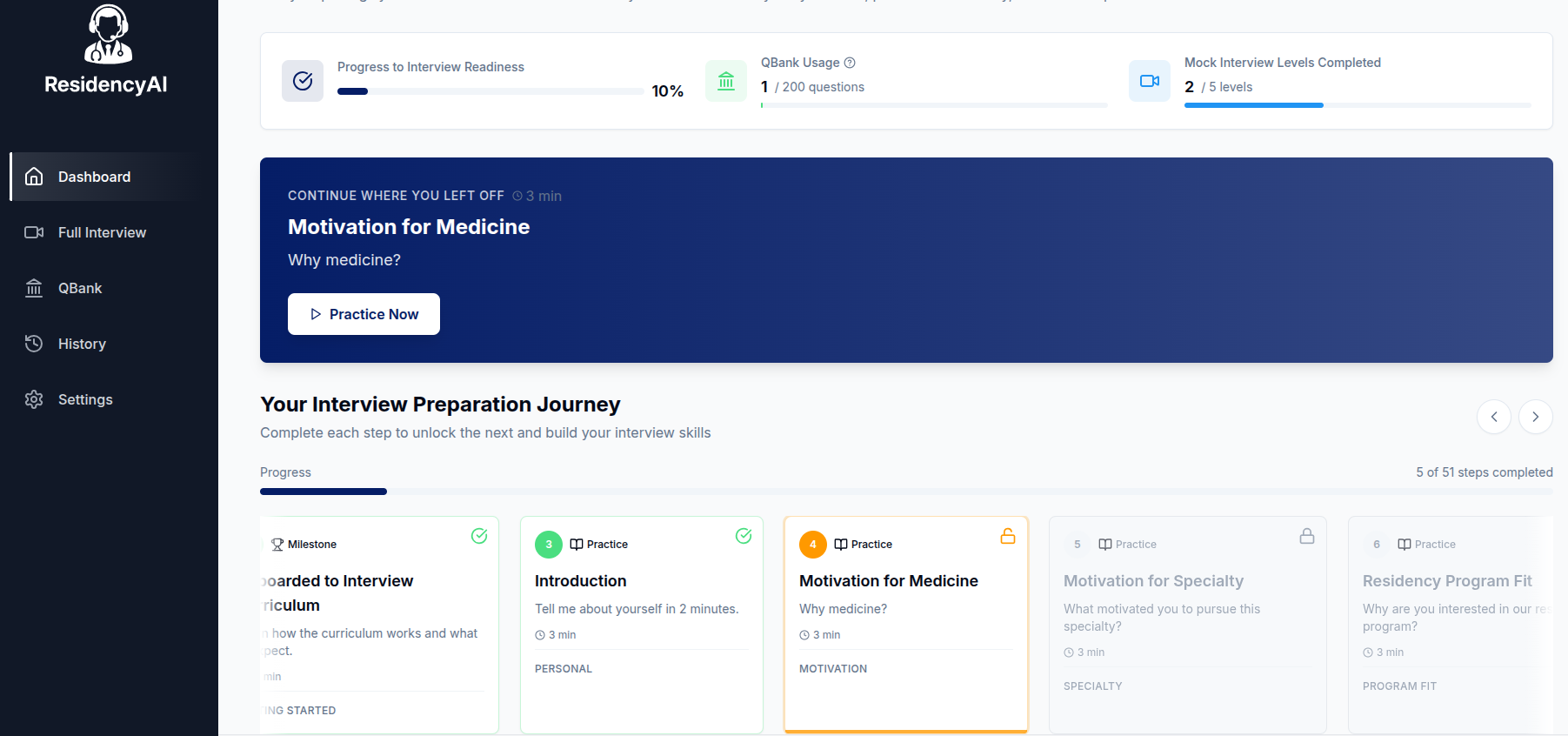
Staring at 200+ questions can feel overwhelming, but consistent, feedback-driven practice turns quantity into confidence. ResidencyAI will act as your personal interview coach, available, to help you practice and refine your answers.
Ready to practice your interview skills?
Try AI-powered mock interviews and get instant, actionable feedback.
| Practice Mode | What It Looks Like | Why It Helps |
|---|---|---|
| Full Mock Interviews | Simulate a 20–30 minute session across a variety of interview scenarios. Find a quiet room and practice as if it were the real thing. | Builds stamina and confidence, and polishes your overall flow. |
| Single-Question Drills | Select any of 200+ questions from the Qbank and tackle them one at a time. | Lets you target weak spots or uncommon questions without running a full interview. |
| Personalized Questions | ResidencyAI reads your personal statement and generates interview questions tailored to your specific experiences and story. | Prepares you for the questions interviewers are most likely to ask which are specific to your application. |
Instant AI Feedback — After each answer, ResidencyAI provides personalized, detailed feedback so you know exactly what to improve.
Personal Statement Review — Beyond interviews, ResidencyAI reviews your personal statement, annotates it, and provides concrete ways to polish it.
Anytime Access — Practice at midnight or on the weekend; no need to coordinate with friends or faculty.
Why It Works
- Personalized analytics for every answer — overall feedback, strengths, areas for improvement.
- Personal statement–driven prep — your interview questions tailored to your personal statement.
- Progress tracking to monitor how ready you are ahead of your interviews.
- 24/7 availability for stress-free, on-demand practice — no scheduling, just practice whenever you want.
- Affordable price compared to other services.
Practicing with a friend or in front of the mirror can build some confidence — but ResidencyAI goes further: it reviews the personal statement that got you the interview, generates questions built specifically around it, and gives you detailed feedback on every answer. When interview day comes, you'll feel like you've been there, done that.